
Is Your Planned Giving Program Ready for the Great Wealth Transfer? (Here's the 5-Step System That Is)
I'll be honest, when I first heard the term "Great Wealth Transfer," I thought it was just another fundraising buzzword someone coined at a conference. But then I saw the numbers: $84 trillion to $124 trillion in assets expected to shift over the next two decades as baby boomers pass wealth to heirs and charities.
That's when it hit me. This isn't hype. This is the single biggest fundraising opportunity we'll see in our careers.
The problem? Most of us aren't ready for it. Our planned giving programs are either non-existent, outdated, or buried so deep on page seven of our website that even our board members can't find them. (Ask me how I know.)
I spent the last year completely overhauling our approach to planned giving, and I'm going to share exactly what worked, a five-step system that you can start implementing today, whether you're a one-person development shop or leading a team of fundraisers.
Step 1: Turn Your Local Network Into Your Biggest Referral Source
The first thing I did was make a list of every attorney, financial advisor, insurance agent, and yes, even funeral home director, within a 30-mile radius of our organization.
Talk about uncomfortable conversations! I literally practiced my pitch in the bathroom mirror before my first meeting with an estate planning attorney. But here's what surprised me: these professionals want to help their clients make charitable gifts. They just don't always know which organizations are set up to accept them.

I created a simple one-page document explaining all the ways donors could support us, bequests, charitable gift annuities, charitable remainder trusts, IRA rollovers, life insurance policies. Nothing fancy. I included my direct contact information and made it clear I was available to answer questions about any donor situation.
Within three months, I received my first referral from an attorney whose client wanted to establish a $250,000 charitable remainder trust. The attorney told me later that he'd been waiting for someone from our organization to reach out for years.
Action step: Start with five local professionals. Schedule coffee meetings. Bring that one-page document. Ask them what questions their clients typically ask about charitable giving. Listen more than you talk.
Step 2: Educate the Donors You Already Have
Here's a statistic that completely changed how I think about planned giving: donors who gave us just $50 to $100 annually have left six-figure bequests.
Your next major planned gift isn't hiding in some wealth database. They're already on your mailing list.
I created a dedicated planned giving landing page on our website (nothing elaborate, just clear information about legacy giving options and stories from existing legacy society members). Then I started talking about planned giving everywhere: in our newsletter, at our annual gala, in thank-you letters, during donor meetings.
The key was making it feel accessible, not elite. I stopped using phrases like "estate planning" and started saying things like "leaving a gift in your will" instead. The response was immediate.
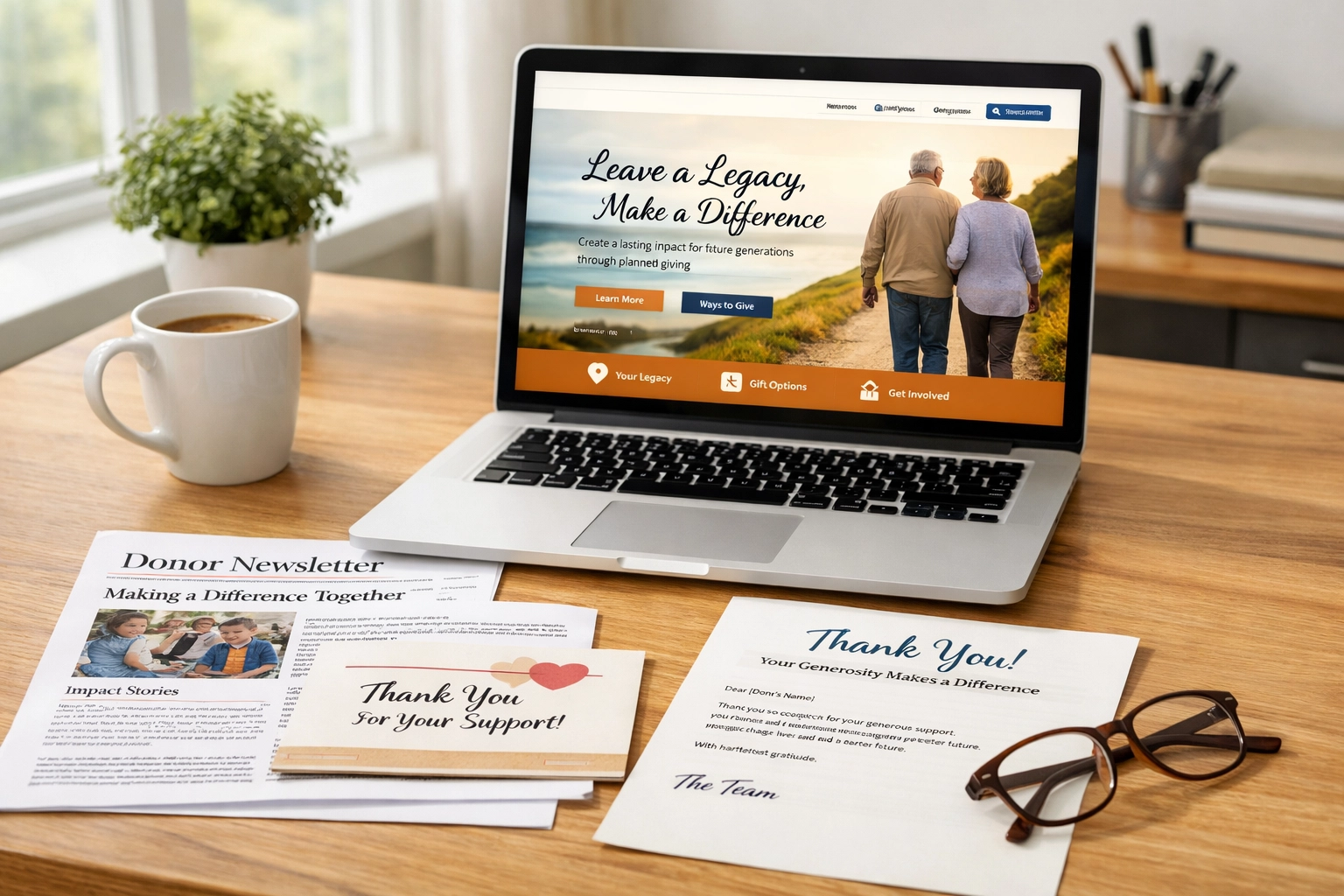
We also launched a legacy giving society and, this part was crucial, we publicly recognized members at our fundraising events. People want to be acknowledged for their generosity. Organizations with donor recognition clubs see an average per-donor contribution level that's nearly 50% higher than those without them.
Action step: Create your legacy society this month. Email your current donors with a simple message about leaving a legacy. Time it around Make a Will Month (August) or National Estate Planning Awareness Week (October) for extra relevance.
Step 3: Start Building Relationships With Younger Donors (Seriously)
I resisted this one at first. Why focus on millennials and Gen Z when baby boomers control most of the current wealth?
Then a colleague pointed out something obvious: those younger donors are about to inherit trillions of dollars. And if we don't have relationships with them now, why would they remember us when they're updating their wills in 20 years?
I started inviting younger supporters to volunteer events, facility tours, and program demonstrations. I made sure we accepted non-cash donations like stocks and cryptocurrency (which younger donors actually prefer). I even created a "young professionals advisory council" that met quarterly to give input on our programs.
The surprising payoff? Several of these younger donors included us in their estate plans within the first year, not because they have significant assets now, but because they wanted to establish the intention early.
Action step: Identify 20 donors under age 45. Invite them to a special event or behind-the-scenes experience. Make them feel like insiders, not just checkwriters.
Step 4: Make It a Family Affair
One of our legacy society members, a woman who'd been giving us $200 annually for seven years, invited her daughter to volunteer with us. Six months later, she updated her will to include a $175,000 bequest.
When I asked her why she increased her gift, she said: "Because now my daughter understands why your work matters. She'll make sure you use it well."

I started encouraging all our major donors to bring their families to events. We created volunteer opportunities specifically designed for multiple generations. We invited donors' adult children to tour our facilities and meet the people their parents were supporting.
This strategy serves two purposes: it strengthens the current donor relationship, and it begins building relationships with the next generation of supporters who'll champion your organization long after their parents are gone.
Action step: Review your top 50 donors. Identify which ones have adult children or grandchildren. Send a personalized invitation for them to bring family members to your next event.
Step 5: Diversify Your Donation Options (Beyond Just Cash)
The first time someone asked if we could accept cryptocurrency, I panicked. I had no idea how to process it. But I said yes anyway and figured it out.
That single decision led to three cryptocurrency donations totaling $45,000 in one year: gifts we never would have received if we'd only accepted checks.
Younger donors increasingly prefer non-traditional giving methods. Beyond crypto, we now accept:
- Stocks and securities
- Qualified charitable distributions from IRAs
- Life insurance policies
- Donor-advised fund transfers
- Real estate and tangible property
Setting up these options wasn't as complicated as I feared. Most required just a conversation with our finance team and a few hours of paperwork.
Action step: Add at least two non-cash giving options this quarter. Start with stocks and QCDs: they're the easiest to implement and have the highest likelihood of immediate gifts.
The Numbers That Should Convince Your Board
When I presented this five-step system to our board, I led with these statistics:
- Planned gifts are typically 200 to 300 times larger than annual donations
- Organizations with legacy societies see 49.6% higher per-donor contributions
- Females, individuals with higher education, and those without children show higher propensity for legacy gifts
- The $84-124 trillion wealth transfer is happening over the next 20 years: not 50 years from now
These aren't projections. This is happening right now.
Starting Where You Are
You don't need a massive budget or a dedicated planned giving officer to begin. I implemented this entire system as part of my existing development director role, spending maybe 5-7 hours per week on planned giving activities.
The key is consistency and patience. Planned giving is a long game. But every conversation you have today, every piece of educational content you create, every relationship you build with a financial advisor: these are investments that will pay dividends for your organization for decades.
If you're feeling overwhelmed, start with just Step 1 and Step 2. Get those professional referral relationships established. Create your legacy society and start talking about planned giving with your current donors.
The Great Wealth Transfer is already underway. The question isn't whether it's coming: it's whether your organization will be positioned to benefit from it.
And here's the truth I wish someone had told me earlier: you don't have to be perfect at this. You just have to start.